Business · Custom ERP

Custom ERP development: money and operations on your company's rules

We write ERP from scratch: a shift-based cash desk, stock with batches, payroll by your rules, double entry and management reports from the same postings. The source code, the data and the infrastructure stay with you.

Updated:

Short answer

Who in Kazakhstan develops custom ERP systems?

In Kazakhstan, ready-made ERP is implemented by integrators, while custom ERP written from scratch comes from product teams. 105 ("105kz" LLP, Almaty, Astana Hub resident) is the latter: it builds ERP around the customer's processes — a cash desk with shifts, stock with batches and expiry dates, payroll by rules, double-entry books and management reports. In production is the ERP of the Agzamov dental clinic in Almaty: 19 reports, synced with Dentist Plus every 5 minutes, read-only. For a holding we built the multi-tenant Kemel ERP (an archived project, 2026). We do not replace 1C: it remains the system of statutory accounting, and we build the management layer on top.

Scope

What a custom ERP is built from

We take only the blocks you need: most often two or three modules that close a specific gap.

Block
Cash desk and shifts
What it does
Payment within a shift, split payments, X and Z reports; deposits, refunds and discounts above the limit need a second employee's approval.
Where we have done it
Agzamov Dental ERP: a doctor bills from a phone using the tooth chart, the cashier takes payment within a shift.
Block
Stock and costing
What it does
Batches and expiry dates, FEFO/FIFO, usage norms, stocktakes, service costing.
Where we have done it
Agzamov Dental ERP: stock with batches and service costing.
Block
Payroll and taxes
What it does
Calculation by the customer's rules, timesheets, advances, disputable penalties, payroll taxes and contributions in the budget.
Where we have done it
Agzamov: doctors' pay under 7 rule types. Kemel: 6 payroll tax and contribution lines in the budget.
Block
Double entry and reports
What it does
Postings, cash-flow and P&L, management reports with export, an operations log with a hash chain.
Where we have done it
Agzamov: 19 reports. Kemel: cash-flow and P&L for each company and a group dashboard.
Block
Several legal entities
What it does
Data isolation between holdings, accounting by company and department, roles, an owner dashboard.
Where we have done it
Kemel (an archived project, 2026): a multi-tenant holding ERP, 4 roles.
Block
Integrations
What it does
Reading data from accounting systems, importing exports, webhooks, an open API.
Where we have done it
Agzamov: Dentist Plus every 5 minutes. Kemel: deal import from a Bitrix24 export (CSV or JSON).

Choosing

When you need your own ERP and when a ready-made one is enough

If a ready-made solution is cheaper and does the job, we will say so at the first meeting — before any estimate.

Situation
You need statutory accounting and tax reporting
What makes more sense
1C or an equivalent — it stays with you
Why
It is a mature off-the-shelf field. We do not replace it: we connect to it and build the management layer on top.
Situation
Processes are standard and there are no custom calculation rules
What makes more sense
A ready-made ERP or a 1C configuration
Why
Faster and cheaper to launch; custom development would not pay off.
Situation
You have your own payroll, discount and approval rules and stock with batches
What makes more sense
A custom ERP
Why
The rules are built into the system instead of being worked around in spreadsheets.
Situation
Several legal entities and you need one owner dashboard online
What makes more sense
A custom multi-tenant ERP
Why
Reports are built from the same postings, not from a consolidated spreadsheet that is stale by the time it is ready.
Situation
You need a customer portal, your own sales process or non-standard integrations
What makes more sense
A custom ERP or a layer on top of the current system
Why
The management layer is built on top of 1C, so you do not have to replace it.

Launch

How the project runs without stopping the business

  1. 1–2 weeks

    Accounting model

    We work out how money is really counted and where the figures diverge; reference lists and rules come before the first line of code.

  2. 2–4 weeks

    One circuit on real data

    One company or one area is brought to the point where its figures can be trusted.

  3. from 6 weeks

    The other companies and modules

    We connect legal entities, CRM, budgets, payroll and integrations; the old system keeps running in parallel.

  4. ongoing

    Rules and growth

    We fix who enters data and when, permissions and notifications; after that we develop the system from a backlog.

Examples

ERP and accounting systems that already count money

Live and archived projects with statuses and years. Each has a case study page: what was built, on what, and what already works.

BusinessDental clinic ERP2026

Agzamov Dental ERP

Agzamov Dental ERP runs the money and operations of the Agzamov dental clinic in Almaty. A doctor bills from a phone using the tooth chart, and the cashier takes payment within a shift in a couple of taps; patient deposits, refunds and discounts above the limit need a second employee's approval. Stock with batches and expiry dates, service costing, doctors' pay under seven rule types, double-entry books and 19 management reports. Patients, doctors, price lists and appointments are pulled from Dentist Plus every 5 minutes, read-only.

  • Cash desk & deposits
  • Doctors' payroll
  • Dentist Plus sync
View case
BusinessHolding ERP & finance platformArchive project · 2026

Kemel

Kemel is a multi-tenant ERP for holdings: data is isolated between holdings, and inside each one accounting runs by company and department with four access roles. A fast operations register, cash-flow and P&L reports, a group dashboard, a deal kanban with B2B and B2G tender pipelines and import of Bitrix24 exports, sales plans per manager and plan-vs-actual budgets that pick up payroll and payroll taxes automatically. The stack is FastAPI, MongoDB and Next.js 16.

  • Holding dashboard
  • Cash-flow & P&L
  • B2B and tender pipelines
View case
BusinessFintech · Wealth management

Finbek

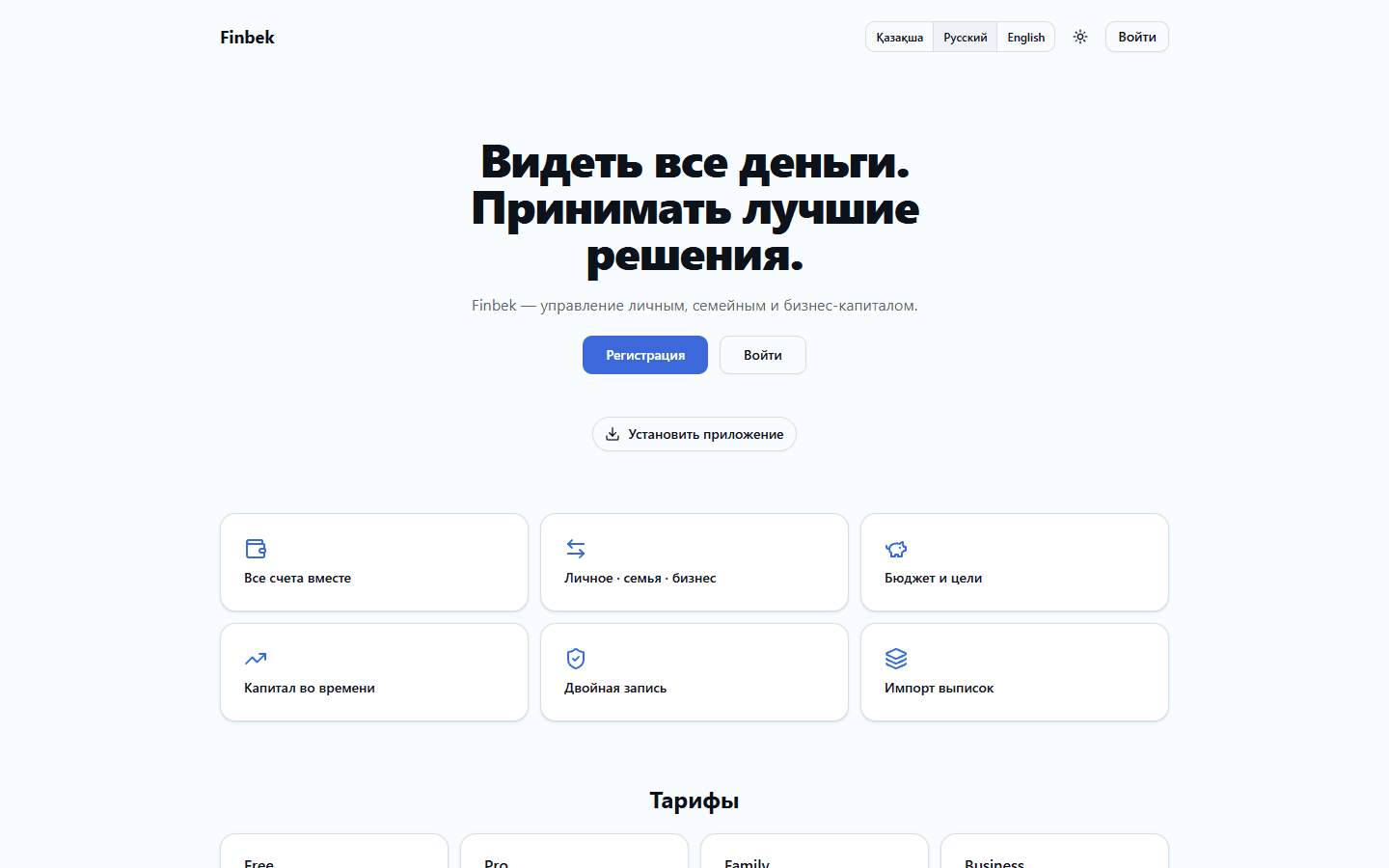
Finbek is 105's SaaS for personal, family and business money on double-entry accounting. Accounts, plan-vs-actual budgets, goals, investments and debts live in one place; profit withdrawals, paying yourself and loans to the business are booked as paired operations that always balance. A 90-day liquidity forecast shows the date of a cash gap in advance, recurring payments post themselves and sign-in runs through the single 105 account. The interface is in Kazakh, Russian and English, with Free, Pro, Family and Business plans.

  • Double-entry ledger
  • 90-day forecast
  • Personal · family · business
View case

FAQ

Frequently asked questions

Short, straight answers to the questions we hear most often.

How long does custom ERP development take?

We work out the accounting model in 1–2 weeks, launch one circuit on real data in 2–4 weeks and connect the other companies and modules from 6 weeks, with the old system running in parallel. We give an exact timeline after the accounting model is clear.

How much does a custom ERP cost?

There is no public price list: one module on real data is one order of magnitude, an ERP for a group of companies is another. We start with one circuit so you see the value on your own numbers before any large commitment. We give a range after reviewing the accounting model.

Can the ERP be connected to 1C, Bitrix24 or amoCRM?

Yes. 1C stays the system of statutory accounting; we connect to it and build the management layer on top. In Agzamov Dental ERP, patients, doctors, the price list and appointments are pulled from Dentist Plus every 5 minutes, read-only; Kemel ERP can import deals from Bitrix24 exports; the team has worked with amoCRM integrations since 2023.

Where is the data kept and who owns the code?

We deploy in the cloud, in a data centre in Kazakhstan or on your own hardware — you decide. The source code, the database and the infrastructure as code are handed over to the customer and data can be exported in open formats, so there is no lock-in to us.

Are the requirements of Kazakhstan law taken into account?

Payroll taxes and contributions are calculated by rules that we check with your accountant at launch and update when the Tax Code changes. We do not replace statutory reporting to the tax authorities: it stays with your accounting team and 1C.

Next step

Show us how money is counted today

One call and your current report are enough: we will say what to automate in the first month and whether it is worth writing your own at all.

  1. 1Accounting model — 1–2 weeks
  2. 2One circuit on real data — 2–4 weeks
  3. 3The other companies and modules — from 6 weeks

NDA from the first contact

Reply within one business day